Connecting Forest Restoration with Sustainable Farming
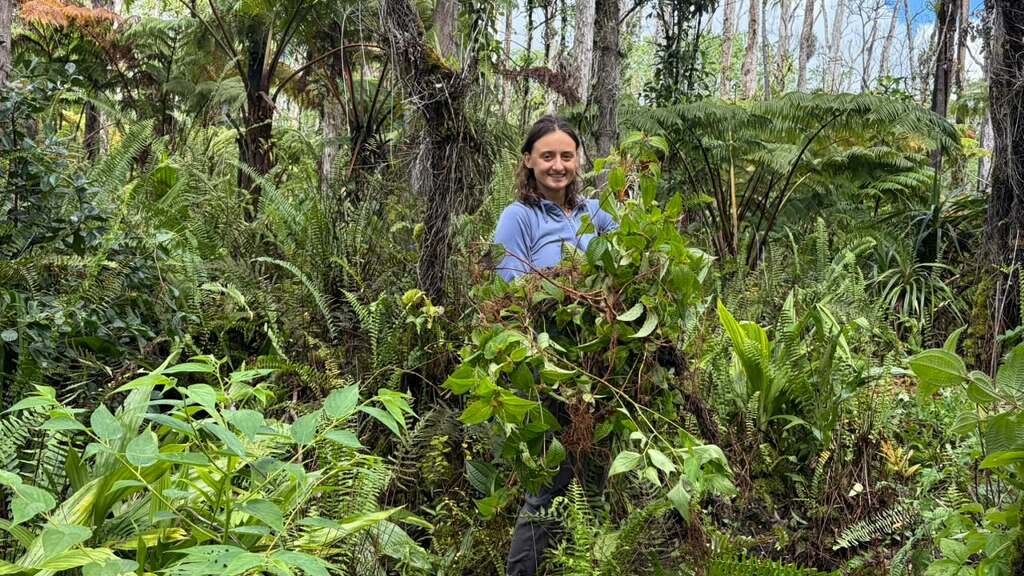
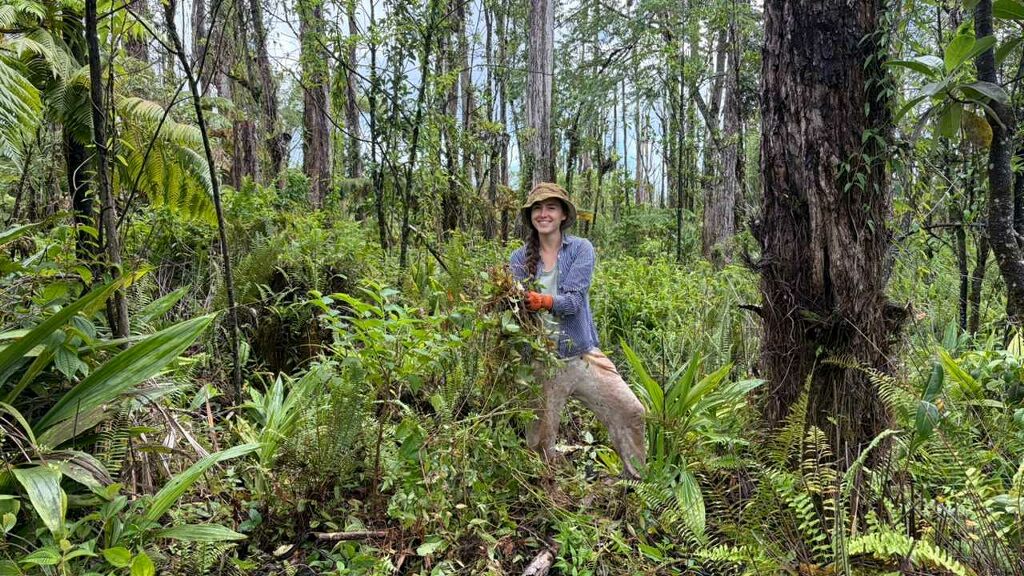
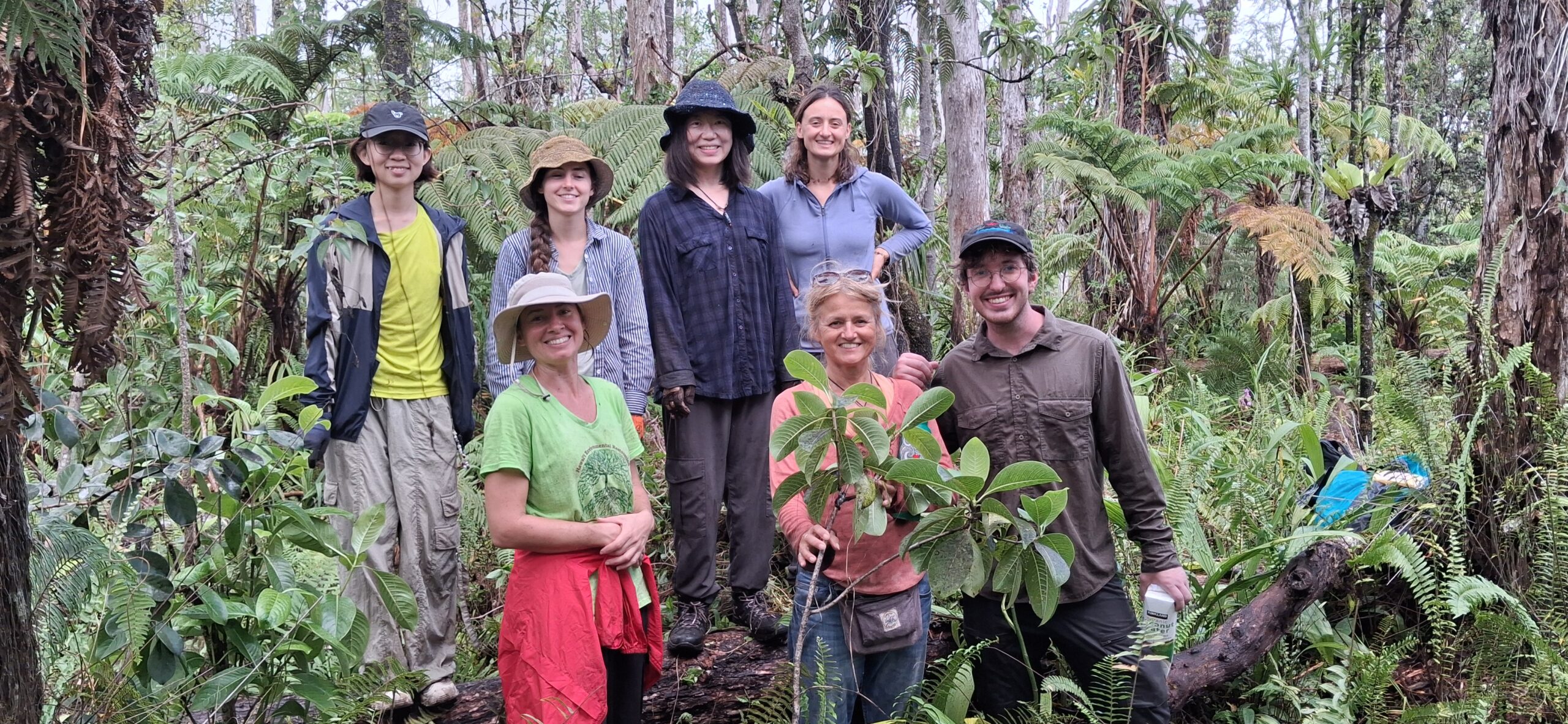 The Lōkahi Kai Organic Orchard crew, visiting through World Wide Opportunities on Organic Farms (WWOOF), enjoyed a special day working alongside the Keauʻohana restoration crew this week. Their host, Xin, wanted to enrich their experience of Hawaiʻi by introducing them to native vegetation, the environmental challenges facing our forests, and approaches to managing invasive species.
The previous week, this same group visited HER’s organic farm location to learn how invasive plant material can be transformed into fertile growing grounds that support sustainable agriculture.
Together, these experiences offered a broader perspective on sustainability, highlighting the important connection between healthy forests and productive agriculture. Forests help regulate water cycles, protect watersheds, and sustain the rainfall and soil conditions upon which farming depends.
Even in the tropics, forest loss can contribute to increasingly arid conditions, soil degradation, and the expansion of grasslands. Hawaiʻi itself offers a powerful example: many landscapes, including the once-forested slopes of Mauna loa and Mauna Kea, have undergone profound changes following the introduction of grazing animals and other human impacts.
Understanding these connections reminds us that sustainable agriculture and forest conservation are not separate endeavors. Both depend on healthy ecosystems, and caring for the land means recognizing the essential relationship between the forests that sustain us and the food systems we cultivate.
HER appreciated the opportunity to share these connections with the Lōkahi Kai crew and to welcome them into the larger community of mālama ʻāina.